What is brand licensing? The know-how to get you started in 2026
In the ever-evolving world of business and marketing, brand licensing has emerged as a powerful strategy to drive growth and expand brand reach. In 2026, understanding brand licensing is more important than ever. It can help businesses harness the power and prestige of established brands, reach untapped markets, boost revenue, and forge valuable partnerships.
Brand licensing is everywhere, operating behind the closed doors of new businesses and major corporations, from non-profits to luxury retailers. It’s such a popular business model that a global licensing industry has grown from it. But licensing can be hard to recognise if you don’t know what you’re looking for – which is where we come in.
In this comprehensive licensing how-to guide, we will explore the realm of licensing, its significance, essential requirements for success, and examples of those who have mastered it.
Let’s dive in!
What is brand licensing?
Licensing allows businesses to essentially ‘rent’ a well-known brand. If you decide to grant a license to your brand, you would essentially be authorising another business to use your legally protected brand identity to produce and market products under your name, while they bear the responsibility for the manufacturing expenses instead of you.
Brand licensing agreements create a wealth of opportunities for retailers to gain exposure to new demographics or extend into new product categories, and are a great way for brand owners to enter new markets while driving revenue and recognition. Popular brands already have an established customer base and a foot in the door – not to mention consumer loyalty – making licensing an accelerated profit route for licensors as well.
Connecting a powerful brand with an established brand identity and brand image to an in-demand consumer product is a surefire way to increase sales and drive additional revenue for both parties. As such, licensing is one of the most widely utilised means of brand extension, largely because it allows a brand to introduce new products without taking on manufacturing itself and while sharing marketing responsibilities with partners.
What is a brand licensing agreement?
A brand licensing agreement is the legal contract drawn up when a brand owner gives another party permission to use its brand under certain conditions.
Key parts of a brand licensing agreement include the:
- licensed rights, laying out what part of the brand can be used
- scope of use, meaning where and how the brand can be used
- license duration, simply stating how long the brand can be used for
- payment terms, including royalties and upfront fees
- quality control measures that protect the brand’s reputation
- and exclusivity, which dictates where and how a company can use the licensed brand
Who is involved in brand licensing?
Licensing comes with its own lingo—but don’t be intimidated, we’ve broken it down for you below.
- The Licensor: The brand owner, who owns the rights to the logo or brand name.
- The Licensee: The party, be they a manufacturer, retailer, or service provider, who is permitted to use the trademark or intellectual property.
- Retailers: The party that agrees to sell the developed products.
- The brand agency: The party that facilitates the deal and secures retailers for the licensor’s product and secures appropriate licenses.
- The style guide agency: The party that creates a usable style guide and visual assets for licensees. The most important assets found in a licensed brand’s style guide are its design elements, such as compositions, badges, patterns, type treatments, borders, frames, backgrounds, textures and iconography. These ready-made assets showcase a brand’s unique visual aesthetic and are the primary tools for developing new consumer products. A style guide allows for collaborations and international licensing and it forms an essential part of the licensing partnerships.
While we’re breaking down the lingo, there are some other key terms worth noting:
- Licensing: Leasing a copyrighted or trademarked brand identity. This encompasses the tagline, brand name, logos, and signature to use in the company’s product line.
- The Licensing agent: The company appointed by the licensor to manage the licensing programme.
- License agreement: The legal document signed by both licensor and licensee that permits the manufacture, sale and use of the licensed product against agreed commercial terms.
- Licensed product: The product or service that carries the licensor’s IP.
- License period: The term of the license agreement.
- License territory: The countries in which the licensed product is allowed to be sold or used during the licensing agreement.
- Royalties: The money paid to the licensor. Typically, the licensee pays a guaranteed minimum payment plus a royalty on all sales to the licensor.
- Minimum guarantee: The total royalty income that is guaranteed by the licensee.
How does brand licensing work?
Licensing is the process of leasing or renting a brand’s image to manufacturers looking to sell products associated with the licensor’s brand. There are two components to licensing: the licensor (the entity licensing their brand) and the licensee (the entity paying for the rights to a brand).
Brand owners lease a trademarked or copyrighted entity (known as a property or intellectual property, or IP) for use in conjunction with a product, service, or promotion. The property in question could be anything from a logo, graphic, slogan, character, name, or a combination of any of these elements.
IP can refer to anything, such as:
- sports clubs and players
- museums
- fashion brands
- television, book or film characters
- book or film franchises
The importance of brand licensing?
Licensing is integral to modern branding. In today’s world of information overload, consumers want brands they can trust, and brands have to develop different ways of earning and maintaining that trust.
Licensed products are an effective way of telling a brand’s story, communicating its message, connecting with consumers (sometimes for the first time), and strengthening brand meaning and reputation. Licensed products can conjure up powerful associations, which can encourage a consumer to buy what they feel is an extension of a familiar or beloved brand.
Today, smart brands don’t just sell things. They know they need to mean something and affect change in accordance with consumer considerations, which now largely expect a certain level of social impact or responsibility and meaningful B2C relationships. Licensing allows customers to engage with beloved brands in novel ways; at its core, licensing is a communications tool.
What are the benefits of brand licensing?
Licensing is immensely beneficial for all parties involved when executed correctly.
Strategically, licensing brands can be a win-win. From a brand owner’s perspective, strategic partnerships can allow you to gain a new customer base, market sector, or distribution channel.
It allows brands and businesses to refresh products for contemporary audiences and respond to ever-changing marketing trends and consumer desires.
It can open up a world of new product types in licensed merchandise, expanding your reach and influence into new categories and new markets to boost retail sales.
From the perspective of the licensee, they benefit by capitalising on an already established brand instead of having to break into a cluttered market starting from scratch. And, most importantly, consumers are happy because they can stay loyal to brands they already know and trust and engage with them in fun, new ways.
Let’s look at the benefits in more detail below.
1. Increasing brand awareness
Licensing will improve the use and visibility of your brand and raise consumer awareness. Depending on the range and networks of a licensor or licensee, this could mean reaching new types of consumers in untapped areas or markets.
2. Improving credibility
Acting on licensing opportunities and working with a licensor or licensee who has established expertise could allow you to benefit from their credibility and capabilities.
3. Entering new markets and distribution channels:
This business model gives you instant access to a brand’s customers, audience, and their brand reputation and vice versa. Whether you’re the licensor or the licensee, both brands lend each other their audiences to grow and expand, boosting brand exposure and brand recognition in one swoop. Entering new markets is much easier when you’re partnered with a brand already established there.
4. Connecting with new customers
A huge benefit of licensing is that it offers opportunities to connect with consumers in different areas, appealing to new target markets who have not historically been interested in a licensee’s product or service. It allows brand owners to move into new business areas without major upfront investment in new manufacturing processes. It’s a win-win.
5. Forging stronger customer relationships
As your brand grows, so do your customers’ expectations and needs. Licensing your brand is one way to drive repeat sales and meet your customers’ growing expectations.
6. Boosting commercial revenue
One of the biggest benefits of licensing your brand, or taking a license, is the additional stream of revenue created, which includes royalty payments in some instances.
7. Protecting from counterfeit products
Licensing your brand can help you stay ahead of the counterfeit curve and keep a close eye on quality standards. Proper quality control is essential when licensing your brand out to other businesses as they carry your name and your reputation with them.
8. Co-branding opportunities
Licensing fosters the potential for diverse strategic collaborations, including co-branding arrangements, wherein both parties mutually license their brands with the intention of leveraging the combined power of their respective brand identities.
9. Increasing brand strength
Licensing allows you to create long-term competitive advantages, as well as broadening your retail presence. It’s a core draw and benefit of adopting a brand licensing strategy.
10. Capitalising on brand loyalty
Take advantage of your customer base’s established relationship with your brand by providing products outside of your usual offerings.
What is the difference between licensing and franchising?
Licensing and franchising are related, but they work in different ways. Licensing lets you share your intellectual property, like your beloved brand or trademark, with others for a fair fee. The licensee retains control over their own operations and assumes manufacturing and distribution responsibilities.
On the flip side, franchising creates a deeper connection. As a franchisor, you empower franchisees to run an entire business using your brand, systems, and support. With specific guidelines and ongoing fees, it’s a dynamic partnership built on mutual growth.
Essentially, licensing is all about unleashing your brand’s potential, while franchising goes the extra mile with comprehensive business concepts and unwavering support.
Types of brand licensing and who they’re for
- Brand and trademark: This is the most common and accessible form of licensing. Businesses can own the rights to use core identity elements like a brand name or logo on products or services. These trademarks exist to prevent other parties from using a company’s assets without permission and to protect brand equity and ensure consistency across touchpoints. This type of licensing is ideal if you have strong brand recognition and want to extend into new categories. For licensees, it’s a shortcut to increased recognition and credibility in markets where brand familiarity drives purchasing decisions.
- Patents: These are different from trademarks and are granted for inventions rather than names or logos. A patent registers your invention and lets you take legal action against anyone who makes, uses, sells or imports your invention without your permission. This type of licensing is great for product developers who may be able to create innovative products but lack the manufacturing power to bring them to market. The technology, healthcare, and engineering industries are full of this type of licensing.
- Character, entertainment or art: Characters are another kind of trademark that brands often license. An obvious example? The global brand superstar Disney. Their characters are used across all sorts of markets—more on that later. This type of licensing taps into nostalgia and emotional connections, creating strong bonds with brands and keeping brands relevant across all types of products and services. Toys, fashion, publishing, and other creative industries make ample use of this type of licensing.
- Software: If you’re paying to use software, you tend to be purchasing a single-user or team license. Unless you have a multi-user license, you’re not permitted to sell that software on to other parties. This is clearly a key licensing opportunity for software developers so that they may monetise digital products. Plus, users gain access to tools without needing to build them. SaaS markets benefit from this licensing set-up, which provides a predictable income stream and long-term relationships.
- Sports: Sports teams around the globe broker massive licensing deals. Their agreements allow third-party companies to produce merchandise with the team’s logo or player names (which they often own the rights to). Manchester United, for example, generates substantial commercial revenue from retail, merchandising, apparel, and product licensing, making it a major revenue stream driven by loyal fan bases. It can easily globalise a brand beyond the games themselves, and pairing sports with fashion and collectible manufacturers is a popular and well-proven match.
Five examples of brand licensing successes
1. The Walt Disney Company does licensing well. According to License Global, they were the top global licensor in 2025 and reported $62 billion in retail sales worldwide from licensed products alone. The company has signed thousands of licensing deals, enabling other businesses to use their characters, music, series names, and other trademarks. Those businesses handle the nitty-gritty details, like printing Mickey Mouse T-shirts, Marvel mugs or Star Wars lunch boxes.
2. Monopoly: we’ve all played it, and after winning or losing and putting it back in the cupboard, that is where our relationship ended. That is, until Monopoly partnered with fast food giant McDonald’s, bringing the board game to life in an instant-win promotion. Monopoly gains continual exposure, and McDonald’s benefits from an uplift in sales as people aim to increase their chances of winning.
3. Marmite has propelled itself into new product areas without taking the risk of a full launch. Having licensed its brand to other products, such as other sweet and savoury snacks, beers, and even Easter eggs.
4. Netflix licenses movies, TV series, and documentaries from third-party production companies. It’s one of the biggest players in entertainment and the most recognisable streamer by far, bringing serious weight with it when putting its name onto productions of all kinds.
5. Ford Motor Company is world-renowned. Whether it’s apparel, toys, or collectables, the iconic American brand has extended its reach through licensing across multiple markets, including collaborations with fashion retailers such as Uniqlo.
What are the key steps involved in the brand licensing process?
There are lots to consider before licensing. Not only do you stand the risk of choosing the wrong partners or pursuing the wrong product categories, but you risk rushing into a licensing agreement without having a congruent brand strategy.
Before embarking on licensing ventures, it’s vital that brand owners have developed a unique visual and verbal design that sets them apart as a brand. Style guides should be developed to assist and support licensees to ensure consistency in the way their brand is being presented. This is the crucial first step when it comes to brand licensing: ensuring that you have a cohesive brand to work with in the first place.
Then, you can move on to the steps below, starting with…
Research, research, research
It’s wise to create an overarching strategy that outlines what you want in a potential license. Evaluate potential licenses to see if they’re a good fit. Are your customers interested in this product? Does your brand’s equity translate to this product? Will this licensee add value?
The Global Licensing Group is the worldwide licensing industry’s leading trade show organiser and media partner. By organising industry-leading events, providing valuable information, and offering data services, they facilitate connections between brands, manufacturers, and retailers. Their primary goal? To foster business growth through consumer products and brand extensions.
It’s the perfect place to start your licensing journey. Let’s look into the next steps.
1. Find the right space
This comes after research. Identify your place in the market, somewhere you’ll command higher profit margins.
2. Protect your intellectual property legally
Ensure your brand’s assets are trademarked and protected from the very outset.
3. Choose the right partner
Like any other relationship, find a partner you want to be with for a long time. Analyse the level of commitment—financial and otherwise—and gauge how well their investment matches your objectives.
4. Set your terms
Draft a licensing contract and establish your flat fee. An attorney or licensing agent will help ensure your contract includes all it needs to and is legally binding.
5. Establish your guidelines and timeframes
How long are you granting the license? When it comes to product categories, price range, and distribution channels, determine the extent to which you are willing to extend your brand. Be clear about the termination clauses, which determine under which circumstances your agreement can be ended before its expiration date.
6. Develop and implement a thorough training program
This will help licensees ensure that all licensed products adhere to your brand’s standards during development and marketing. This is key to ensuring quality control.
The importance of branding in licensing
As touched upon above, licensed brands achieve greatness through design. Before entering the licensing area, you must build, protect, and manage your brand and its esteem. Clear strategy, consistent brand management, not to mention bold, brave and memorable design, are what will give your brand a competitive advantage.
Start your process by deconstructing both your and the licensor’s brand to identify the unified brand backbone, which will direct your strongest creative strategy. Licensed products don’t just benefit from a unique, unified, and unambiguous branding backbone: they rely upon it. This framework should be consistently employed in the development of every design asset and consumer touchpoint, and incorporated into every consumer product.
Developing a brand style guide
You want to demonstrate that you have a flexible brand, developing a style guide that weaves your brand through each fibre of the licensing program’s design elements, from compositions, badges, fonts, and patterns, to type treatments and iconography. By doing this, you’ll show that you can represent a broad range of consumer categories, making it abundantly clear how limitless the possibilities are.
Licensing is a partnership, and it’s about working together to maximise branding and business potential. So, don’t fall into the habit of simply sticking a logo onto existing products. Instead, product applications should be uniquely designed to work specifically with the licensed brand and the product market.
To reap these benefits of licensing, licensees should align their company with the actions that are being taken by the brand owner, and brand owners must give their licensees the guidance and support that they need to be effective.
As licensees, use the style guide as inspiration, adopting elements that align with the brand in both a visual, verbal and tactile manner. This has the power to connect the brand story to consumers and elicit an emotional response.
As a brand, you need to have a strong commercial identity that can transfer well across new product ranges. Developing a well-conceived brand strategy and implementing it through style guides before pursuing licensing partnerships will allow you to drive a consistent customer experience.
Capitalising on trends
To keep your licensing programme fresh and relevant and to forge new licensee relationships, look to create trend-oriented style guidelines throughout the year. These style guidelines focus on ‘what’s next’, allowing you to stay ahead of the curve and capitalise on upcoming trends. This will ensure that your licensing programme is continually relevant to the consumer, retailer and the markets you work in and aspire to be in. This insight-driven approach is integral in forming brand direction and development while also giving licensees fresh and exciting inspiration and ideas for new product development. Keep your eye on social media; it’s where major trends develop, and there’s no knowing what might start taking the online world by storm next.
Learn how Studio Noel can help
Here at Studio Noel, we know that at the heart of brand licensing lies powerful brands. We work closely with brand owners and licensors, from small businesses to global titans, to extend their brands into new product categories and enhance their recognition through the creation of brand experiences and style guides that engage, inspire and connect.
Get in touch to see how we can help you to enter new markets or drive sales through the creation of style guides and product ideas that are memorable, imaginative and ownable.
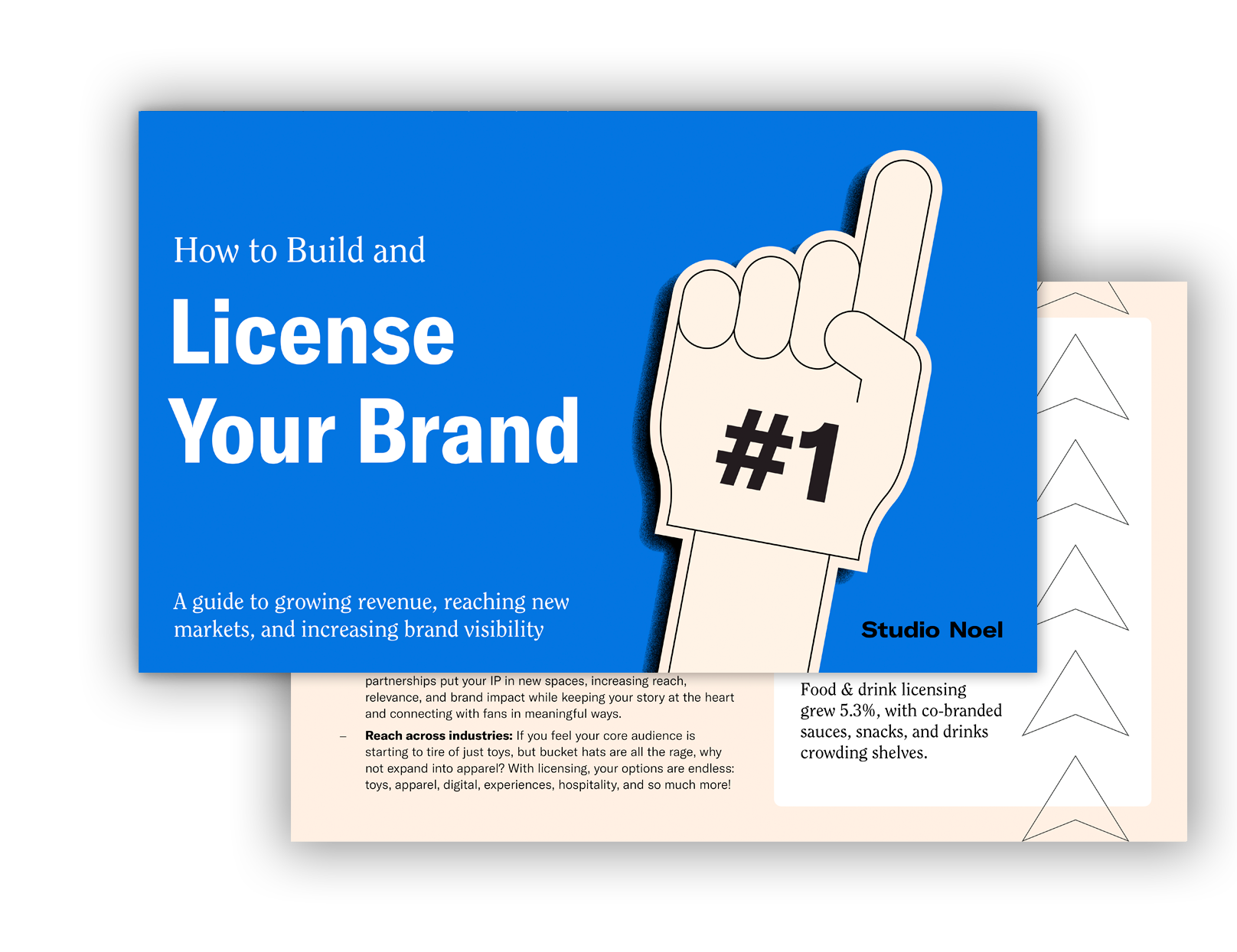
Unlock new opportunities for your business by downloading our PDF guide on Brand Licensing.
Download guide